The plastic industry has undergone rapid evolution in recent decades, with film blowing machines playing a pivotal role in transforming raw plastic materials into functional and versatile films. Among the various types of film blowing machines, the 3-layer film blowing machine stands out for its capability to produce multilayer films that offer superior strength, barrier properties, and efficiency. This article will explore the different uses of 3-layer film blowing machines across various industries, including packaging, agriculture, and construction, as well as their significant advantages in terms of sustainability and cost efficiency.
1. Understanding 3-Layer Film Blowing Machines
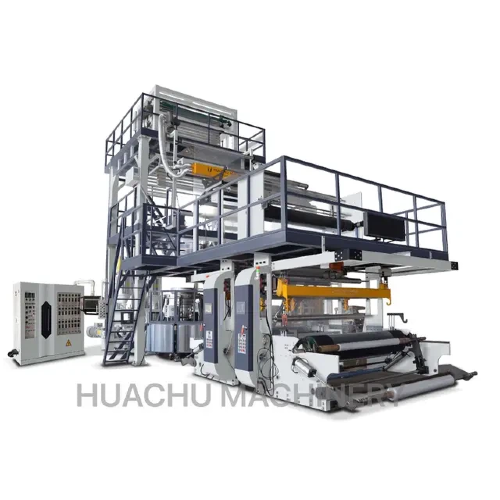
Film Blowing Machines are devices used in the plastic extrusion process to produce thin plastic films by extruding a polymer through a circular die. The plastic is then blown into a bubble shape, which is subsequently cooled, flattened, and rolled. The key innovation of a 3-layer film blowing machine lies in its ability to process three separate layers of polymer at once, combining them into a single, multilayered film.
The common configurations for 3-layer film blowing machines are ABA and ABC:
ABA Configuration: This involves two outer layers of the same material and a middle layer that may contain recycled or lower-cost material. The outer layers often focus on the film's physical properties, such as strength and clarity, while the middle layer can enhance barrier properties or provide cost savings.
ABC Configuration: In this more advanced setup, three distinct materials are used for each layer, optimizing the film's mechanical properties, barrier functions, and environmental performance.
The three-layer setup allows manufacturers to create films with varied properties, depending on the specific requirements of the application, making these machines incredibly versatile.
Advantages of 3-Layer Film Blowing Machines:
Improved film properties: The ability to combine different materials with distinct properties ensures enhanced durability, flexibility, and strength.
Cost-effective: By using recycled or less expensive materials in the middle layer, the production cost is optimized without compromising on quality.
Customizable: The configuration allows for the customization of films for specific functions such as moisture resistance, UV protection, or strength.
2. Common Applications in Packaging
Packaging is perhaps the most widespread application of film blowing machines, especially in the production of flexible films. With the 3-layer film blowing machine, the packaging industry benefits from superior films with enhanced mechanical and barrier properties. Below are some key applications of 3-layer films in packaging.
Flexible Packaging
Flexible films, produced using 3-layer film blowing machines, are used for packaging a wide range of products, including food, pharmaceuticals, and consumer goods. The three layers provide the necessary strength and barrier properties to preserve product integrity.
Food Packaging: Food packaging films are often designed to preserve freshness by providing an airtight seal, preventing moisture loss, and ensuring protection from oxygen and other contaminants. 3-layer films can provide an additional layer for barrier protection without adding excessive thickness or weight to the film.
Non-food Packaging: For non-food products, such as electronics and textiles, 3-layer films provide an excellent combination of flexibility, strength, and resistance to tears, ensuring that the product is well-protected during transport and storage.
Barrier Films
3-layer films are frequently used to produce films with excellent barrier properties. These films can prevent the passage of gases, moisture, and UV light, which is crucial in applications like food packaging, medical packaging, and electronics packaging.
Moisture and Oxygen Barriers: The middle layer often contains high-barrier materials that prevent moisture and oxygen from permeating the film, which is especially important for products like snacks, medicines, and cosmetics.
UV Protection: For products sensitive to sunlight, such as agricultural goods or certain types of electronics, 3-layer films can incorporate UV-resistant materials to protect against degradation from ultraviolet radiation.
Bags and Pouches
A significant application of 3-layer films is in the production of durable and flexible bags and pouches, which are commonly used in both the food and non-food sectors. These bags are often designed for applications like:
Retail Bags: Lightweight, strong bags used for groceries, retail products, and other consumer goods.
Specialty Pouches: Flexible pouches used for liquids, powders, and granular products, where a combination of barrier properties is needed to prevent leakage and maintain product freshness.
Table 1: Application Comparison of 3-Layer Films in Packaging
Application | Features | Benefits |
Food Packaging | Moisture resistance, oxygen barrier | Increased shelf life and product protection |
Non-food Packaging | Tear resistance, durability | Protection during transport and storage |
Barrier Films | Moisture, oxygen, and UV protection | Preserves product quality and extends shelf life |
Bags & Pouches | Flexibility, seal strength | Versatile for various retail and food items |
3. Agricultural Films
The agricultural industry also benefits greatly from 3-layer film technology, as these films provide critical protection against the elements while enhancing crop yields and maintaining product quality.
Greenhouse Covers
3-layer films are used for greenhouse covers, where their ability to provide UV protection and regulate temperature makes them ideal. These films help create an optimal environment for plant growth by allowing sunlight to penetrate while protecting crops from harmful UV rays.
UV Protection: The outer layers often include UV-resistant additives that help filter harmful radiation, protecting crops from overexposure.
Temperature Control: The middle layer, often air-filled or with enhanced insulation properties, helps regulate the greenhouse's internal temperature, maintaining a consistent environment for plants.
Mulch Films
3-layer films are used in the production of mulch films, which are placed over soil to retain moisture, reduce weed growth, and regulate soil temperature. The durability and flexibility of 3-layer films make them perfect for long-term use in agricultural fields.
Moisture Retention: These films help keep the soil moist, reducing the need for frequent irrigation.
Weed Control: By blocking sunlight from reaching the soil, mulch films effectively prevent weed growth, improving crop yield.
Agricultural Packaging
Films produced by 3-layer machines are also used in packaging agricultural products. The multilayer structure helps ensure that products like fruits, vegetables, and flowers are kept fresh during transport and storage by providing an airtight seal and protection from external contaminants.
4. Industrial and Construction Films
In addition to agricultural and packaging uses, 3-layer film blowing machines are also widely employed in industrial and construction applications, where durability, flexibility, and protective properties are required.
Protective Films for Surfaces
In construction and industrial settings, 3-layer films are used as protective films during transportation and handling. These films are designed to shield surfaces from dust, dirt, and damage, especially during long-distance shipments or while in storage.
Surface Protection: Films can protect items such as glass, furniture, and machinery parts from scratches, dust, and impact during handling.
Construction Films
Films created with 3-layer machines are also used in construction, particularly as vapor barriers, insulation films, and weatherproofing films. These films are integral to maintaining energy efficiency and controlling the building environment.
Vapor Barriers: 3-layer films with enhanced moisture resistance are used to prevent the infiltration of water vapor into walls and ceilings.
Weatherproofing: Films provide protection against rain and wind, preventing damage to materials during the construction process.
5. Sustainability and Cost-Efficiency in 3-Layer Film Production
Sustainability has become an increasingly important consideration in the plastic industry, and 3-layer film blowing machines are well-suited to meet these demands.
Reducing Plastic Usage
The multilayer structure of the films produced by 3-layer machines allows manufacturers to reduce the amount of plastic needed to achieve the desired strength and barrier properties. By using recycled or lower-cost materials in the middle layer, producers can significantly decrease plastic waste and reduce their overall environmental footprint.
Cost Benefits of Multi-layer Technology
By optimizing the material distribution within the layers, 3-layer machines can lower production costs while still maintaining the desired film properties. For example, using recycled plastic in the middle layer of the film reduces the need for virgin plastic, leading to cost savings for manufacturers.
Optimized Material Use: The ability to use different materials in each layer ensures the best combination of performance and cost-efficiency.
6. Advantages of 3-Layer Film Blowing Machines in the Plastic Industry
The 3-layer film blowing machine offers several advantages over single or double-layer machines, particularly in terms of film performance and versatility. The key benefits include:
Enhanced Film Strength: The three-layer structure improves the mechanical strength and durability of the films, making them suitable for a wider range of applications.
Improved Film Uniformity: The precise control of the extrusion process ensures consistent thickness and uniformity across all layers of the film.
Higher Barrier Performance: By incorporating different materials for each layer, 3-layer films can offer superior barrier properties against moisture, gases, and UV light.
7. Conclusion
3-layer film blowing machines are essential tools for producing advanced plastic films that serve various industries, including packaging, agriculture, construction, and industrial applications. These machines are designed to create multilayer films that combine strength, flexibility, and excellent barrier properties, revolutionizing film production. With the added benefits of sustainability and cost-efficiency, 3-layer film blowing machines help meet the growing economic and environmental demands within the plastic industry.
At Wenzhou Huachu Machinery Co., Ltd., we specialize in providing high-quality 3-layer film blowing machines that cater to the unique needs of our customers. Our machines are engineered for performance, offering optimal material efficiency, enhanced durability, and superior barrier capabilities. Whether you are looking to improve your production process or explore new applications, we offer tailored solutions to meet your requirements.
If you're interested in learning more about how our 3-layer film blowing machines can enhance your production capabilities, feel free to contact us. Our team is ready to assist you with expert advice and provide the best solutions to fit your business needs.
8. FAQ
What is the difference between single-layer and 3-layer film blowing machines?
Single-layer machines create films with only one layer of material, while 3-layer machines produce films with three distinct layers, offering enhanced strength, durability, and customization.
How does the 3-layer blowing process improve film strength?
The multi-layer structure increases the film's strength by combining different materials with complementary properties, such as improved toughness in the outer layers and enhanced barrier functions in the middle layer.
What materials can be used in a 3-layer film blowing machine?
Common materials include LDPE, HDPE, LLDPE, and recycled plastics, with the middle layer often containing recycled material for cost efficiency.
Is 3-layer film blowing machine technology more expensive than single-layer machines?
While 3-layer machines are more complex and typically have higher initial costs, they offer greater long-term savings through optimized material use and increased film performance.
Can 3-layer film blowing machines be used for both food and non-food applications?
Yes, these machines are highly versatile and can produce films for both food packaging (with barrier properties) and non-food products (with strength and durability).


