The packaging industry is constantly evolving to meet growing demands for stronger, lighter, and more sustainable film products. At the center of this evolution is the AB Double Layers Film Blowing Machine, an advanced piece of equipment that allows manufacturers to produce high-quality plastic films with enhanced strength, flexibility, and performance. By combining two layers of different materials into one film, this technology offers distinct advantages compared to traditional single-layer machines.
For businesses engaged in packaging production, efficiency is critical. Every improvement in material use, energy savings, or product quality directly impacts profitability and sustainability. This article will explore the concept of AB double layers film blowing, explain how the machines work, highlight their benefits, and demonstrate why they have become essential tools in the packaging industry.
Understanding Film Blowing Technology
Before looking into theAB double layers system, it is important to understand the basics of film blowing. A film blowing machine melts raw plastic materials such as polyethylene (PE) or polypropylene (PP) and extrudes them into a thin tubular film. This tube is inflated with air, cooled, and flattened into rolls of film that are later converted into bags, wraps, and other packaging products.
Film blowing is widely used because it allows for the production of thin yet durable films, with precise control over thickness, width, and texture. Traditional machines produce single-layer films, which are useful for many applications but often limited in performance.
What Is an AB Double Layers Film Blowing Machine?
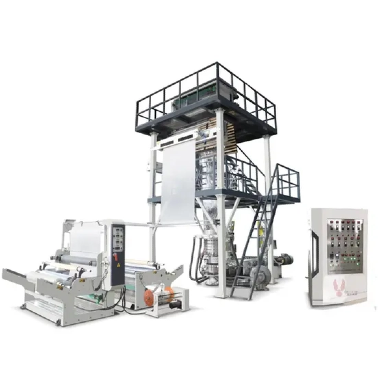
An AB Film Blowing Machine is a specialized piece of equipment designed to produce films with two distinct layers (A and B). Each layer is formed by independently driven screws, allowing for flexible layering of materials, such as combining virgin and recycled film or adjusting optical and mechanical properties between the layers.
Unlike single-layer films, double-layer films can combine the strengths of two different materials. For example, one layer may provide excellent tensile strength, while the other enhances flexibility or offers barrier resistance. This combination results in films that perform better in packaging applications, particularly in industries where durability and versatility are key.
How AB Double Layers Film Blowing Machines Work
The operation of an AB double layers machine follows a carefully engineered process:
Material Feeding – Different raw materials are fed into two separate extruders. Each can be customized with additives such as UV stabilizers, coloring agents, or anti-static compounds.
Extrusion – The extruders melt the materials and push them forward under controlled pressure and temperature.
Co-extrusion Die Head – The molten materials from the two extruders converge at the die head, forming a two-layer tubular film.
Blowing and Cooling – Compressed air is injected to inflate the film into a bubble, which stretches and thins the material. Cooling systems stabilize the bubble and lock in the film’s properties.
Flattening and Winding – The film bubble is collapsed by rollers into flat sheets and then wound into rolls for further processing.
This process allows manufacturers to produce films with tailored characteristics, such as increased strength, smoothness, or resistance to tearing and puncturing.
Advantages of AB Double Layers Film Blowing Machines
The efficiency of two layer blown film plant can be understood through several key advantages.
1. Enhanced Film Strength and Durability
By combining two layers, manufacturers can create films that withstand stretching, tearing, and puncturing better than single-layer films. This is critical in packaging applications where protection during transport and handling is essential.
2. Cost Efficiency through Material Optimization
AB machines allow producers to use different materials in each layer. For example, a stronger outer layer can be paired with a cost-effective inner layer, reducing overall material expenses while maintaining performance.
3. Improved Flexibility in Production
Manufacturers can adjust the ratio of materials in each layer to create films tailored for specific needs, such as food packaging, industrial wrapping, or agricultural applications. This flexibility enhances production efficiency by serving multiple markets with one machine.
4. Better Film Appearance and Printing Quality
Films produced by AB machines often have smoother surfaces, which improves printability. High-quality printing is essential in the packaging industry, where branding and product information must be clear and attractive.
5. Energy Savings
Modern AB double layers machines are designed for energy efficiency, using advanced heating and cooling systems to minimize energy waste. Less power consumption translates into lower operating costs.
Applications in Packaging Production
AB double layers film blowing machines are widely used across multiple packaging sectors.
Food Packaging – Films provide excellent sealing properties and clarity, making them suitable for snacks, frozen goods, and fresh produce.
Industrial Packaging – Heavy-duty films are used for shrink wraps, protective covers, and pallet wraps.
Agricultural Packaging – Multi-layer films offer UV resistance and strength, ideal for greenhouse covers and silage wraps.
Retail Packaging – Shopping bags and product wraps benefit from the balance of strength and lightweight design.
This broad range of applications highlights why the AB double layers machine has become an indispensable part of packaging production lines.
Efficiency in Production Lines
The term efficiency in manufacturing includes not just speed, but also material utilization, energy consumption, and product consistency. AB double layers machines contribute in several ways:
Higher Output – Two extruders working together can produce more film in less time.
Reduced Waste – Advanced controls minimize defects, leading to fewer rejected rolls.
Consistency – Uniform film thickness and smooth surfaces reduce errors in downstream processes like printing and cutting.
For packaging companies, these improvements translate into better profitability and competitiveness in the market.
Technological Innovations
Recent years have seen several innovations in AB double layers film blowing machines:
Automatic Thickness Control – Ensures even film distribution, reducing human error.
High-Efficiency Cooling Systems – Improves production speed without compromising film quality.
Digital Control Panels – Allow operators to adjust settings easily, improving accuracy and reducing downtime.
Environmentally Friendly Designs – Incorporation of biodegradable materials and recyclable plastics aligns with global sustainability goals.
These innovations continue to push the efficiency of AB machines to new levels, making them future-ready for packaging industries worldwide.
Environmental Considerations
Sustainability has become a central concern in packaging. AB double layers machines support eco-friendly practices in several ways:
Material Reduction – Stronger films mean thinner films can be used without sacrificing durability.
Recyclability – Multi-layer films can be designed for easier recycling, depending on material choices.
Compatibility with Biodegradable Resins – Many AB machines can process eco-friendly materials, supporting green initiatives.
By reducing plastic waste and optimizing resources, these machines help companies balance production needs with environmental responsibilities.
Challenges and Solutions
While AB double layers film blowing machines offer many advantages, they also come with challenges:
Higher Initial Investment – Double-layer machines are more expensive than single-layer models. However, their efficiency and versatility often provide long-term savings.
Operator Training – Machines are more complex, requiring skilled technicians. Modern digital controls help simplify operations and reduce training time.
Maintenance Requirements – With more components, regular maintenance is essential. Preventive schedules and advanced monitoring systems help reduce downtime.
Addressing these challenges ensures that companies can fully benefit from the machine’s capabilities.
Future Outlook
The future of packaging production will continue to emphasize efficiency, sustainability, and customization. AB double layers film blowing machines are well-positioned to meet these demands. As consumer preferences shift toward environmentally friendly packaging and global markets demand higher-quality films, the role of these machines will only expand.
Advancements in automation, material science, and digital technology are expected to make AB machines even more efficient, reliable, and eco-conscious in the coming years.
Conclusion
The AB Double Layers Film Blowing Machine represents a significant step forward in packaging production technology. By allowing manufacturers to combine two layers of material into a single, high-performance film, these machines deliver greater strength, cost savings, flexibility, and sustainability. Their role in food, industrial, agricultural, and retail packaging underscores their importance in modern production lines.
For companies aiming to remain competitive in the packaging industry, investing in AB double layers film blowing machines is not just about improving efficiency today—it is about preparing for the challenges and opportunities of tomorrow.


