Plastic films are everywhere in our daily lives and industrial activities. From food packaging to industrial wrapping, agricultural covers to protective consumer goods packaging, these films play a critical role in modern economies. For manufacturers, the challenge lies in producing films that are not only cost-effective but also strong, flexible, and reliable enough to meet diverse applications.
One of the most important advancements in this field has been the introduction of AB two-layer blown film machines. Unlike single-layer machines, AB machines use two extruders to produce films with two distinct layers, each layer having different material properties. This allows manufacturers to combine the benefits of different materials, optimizing performance. This innovative design has transformed how packaging films are produced, particularly in achieving the ideal balance between strength, flexibility, and other desired properties such as barrier resistance, making it highly suitable for a variety of applications.
This article explores how AB double layers film blowing machines enhance these qualities, the science behind the technology, and the practical benefits they bring to manufacturers and end-users alike.
Understanding the AB Double Layers Film Blowing Process
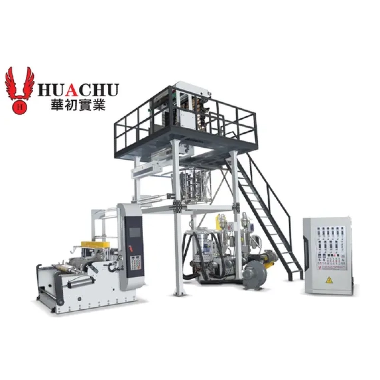
The AB double layers film blowing process involves a two-layer co-extrusion system that combines two distinct materials (A and B) to create films with enhanced performance, cost-efficiency, and specialized properties. Unlike symmetric ABA films, AB films have an asymmetric structure that allows for more versatile applications. This process uses two extruders to co-extrude the materials through a die-head, ensuring good color separation and optimal performance for each layer. The ability to choose different materials for each layer enables manufacturers to produce films with superior barrier properties, such as moisture resistance, gas barriers, UV protection, and aroma retention. As a result, AB double-layer blown film machines are widely used across industries like packaging, agriculture, food, medical, and industrial sectors, offering manufacturers a cost-effective solution to meet diverse packaging needs and support sustainable practices.
The Importance of Strength and Flexibility in Films
Film strength and flexibility are two of the most critical factors in packaging production.
Strength ensures the film can withstand stress during storage, handling, and transportation. It prevents tearing, puncturing, or breaking under load. Strong films reduce waste, protect contents, and increase customer satisfaction.
Flexibility makes films easier to handle, wrap, and process. Flexible films can conform to irregularly shaped products, support stretching without breaking, and improve sealing during packaging operations.
Balancing these qualities can be difficult with single-layer films, as adding more strength often reduces flexibility and vice versa. This is where AB double layers technology makes a significant difference.
How AB Double Layers Machines Enhance Film Strength
One of the key advantages of AB machines is their ability to produce stronger films without increasing thickness unnecessarily. They achieve this in several ways:
1. Layered Material Combination
By combining two different materials or grades of the same material, manufacturers can create films with improved tensile strength. For example, one layer can be optimized for rigidity while the other provides elasticity, resulting in a stronger overall structure.
2. Better Distribution of Stress
The dual-layer structure spreads mechanical stress across both layers rather than concentrating it in one. This reduces the likelihood of tears or punctures when the film is under tension.
3. Enhanced Resistance to External Factors
With an AB machine, the outer layer can be designed for durability, protecting the film from scratches, impact, or environmental exposure. This makes the film better suited for demanding industrial and outdoor applications.
4. Stronger Sealing Performance
In packaging, seals are often the weakest point. AB films can be engineered with one layer optimized for heat sealing, creating stronger, more reliable seals that resist breakage during use.
How AB Double Layers Machines Improve Film Flexibility
Flexibility is equally important, and AB machines contribute to this property in several innovative ways:
1. Material Versatility
Manufacturers can choose softer, more elastic resins for one of the layers, allowing the final film to bend and stretch more easily without losing strength.
2. Balanced Thickness
Instead of relying on a single thick layer, AB films distribute thickness across two layers. This creates a lighter, more pliable film that maintains flexibility while remaining strong.
3. Enhanced Stretching Capability
The two-layer design allows films to stretch further without tearing, which is especially valuable in applications like shrink wrapping or stretch packaging.
4. Improved Handling in Production
Flexible films produced by AB machines are easier to process in downstream equipment such as printers, cutters, and bag makers, improving overall manufacturing efficiency.
Practical Benefits in Packaging Applications
The combination of strength and flexibility achieved with AB double layers machines has direct advantages in real-world packaging:
Food Packaging: Films protect contents from damage while remaining flexible enough for sealing and wrapping.
Industrial Packaging: Strong films handle heavy loads, while flexibility allows them to wrap tightly around irregularly shaped goods.
Agricultural Uses: Films used for mulching or covering crops need durability against weather and handling, balanced with flexibility for application in the field.
Consumer Products: Packaging that feels smooth, stretches easily, and resists tearing enhances customer satisfaction.
These practical benefits make AB double layers machines essential for manufacturers aiming to meet high market demands.
Innovations Supporting Strength and Flexibility
The continuous improvement of AB film blowing technology has led to several innovations that further enhance film performance:
Spiral Die Heads: Modern die heads ensure better mixing and bonding between layers, creating uniform films with reliable strength.
Automatic Thickness Control: Advanced monitoring systems ensure precise thickness distribution, maintaining consistent film properties across the roll.
Energy-Efficient Extrusion: Improved extruder designs allow better melting and mixing of raw materials, enabling stronger films without additional energy waste.
Eco-Friendly Material Compatibility: AB machines now process biodegradable or recycled plastics effectively, producing strong yet flexible films that meet sustainability goals.
Economic and Environmental Advantages
Beyond film quality, AB machines also provide broader economic and environmental benefits:
Reduced Material Costs: By achieving better strength and flexibility without increasing thickness, less raw material is needed.
Lower Energy Consumption: Energy-efficient heating and cooling systems reduce operating costs.
Waste Reduction: Improved film uniformity minimizes defective rolls and rejects.
Sustainability: Compatibility with recyclable and biodegradable materials aligns with global trends toward greener packaging.
These advantages make AB double layers machines not only a technical improvement but also a smart financial investment.
Looking to the Future
The role of AB double layers film blowing machines in packaging production is only set to grow. As industries demand higher performance films and more sustainable solutions, these machines will continue to evolve with smarter automation, greater customization, and advanced eco-friendly processing capabilities. Manufacturers that invest in AB technology now are positioning themselves for long-term success.
Conclusion
The AB double layers film blowing machine represents a powerful advancement in plastic film production. By combining materials in a two-layer structure, it allows manufacturers to produce films that are both stronger and more flexible than traditional single-layer options. These improvements translate directly into better packaging performance, lower costs, and increased customer satisfaction across industries ranging from food to industrial and agricultural applications.
With innovations in extrusion, thickness control, energy efficiency, and material compatibility, AB machines not only meet current demands but also prepare manufacturers for the future of sustainable, high-quality packaging. For factories seeking reliable and advanced solutions, Wenzhou Huachu Machinery Co., Ltd. provides trusted AB double layers film blowing machines that deliver exceptional strength, flexibility, and efficiency.


