Imagine boosting production output without sacrificing quality. The High-Speed Three-layer ABA Film Blown Machine makes this possible. Its advanced design and capabilities redefine efficiency in film production. In this post, you'll learn how this machine enhances production efficiency, offering insights into its key features and operational benefits. Discover why it's a game-changer in the manufacturing industry.
Key Features and Specifications
The high-speed three-layer ABA film blown machine stands out for its advanced design and robust capabilities. It features a three-layer co-extrusion system, often labelled as ABA, where the outer layers (A) provide strength and gloss, while the inner layer (B) offers flexibility and barrier properties. This configuration allows production of films that combine durability, clarity, and performance.
Key specifications typically include:
● High extrusion output: Machines can operate at speeds up to 100 meters per minute or more, significantly increasing output.
● Wide film width range: Suitable for films from 500 mm to over 1500 mm in width.
● Layer thickness control: Precise regulation of each layer's thickness ensures consistent film quality.
● Energy-efficient motors and drives: Reduce power consumption while maintaining speed.
● Advanced cooling systems: Ensure rapid solidification and stable film properties.
● Computerized control panel: Enables real-time monitoring and adjustment of parameters like temperature, speed, and film thickness.
These features make the machine highly adaptable for producing various types of films used in packaging, agriculture, and industrial applications.
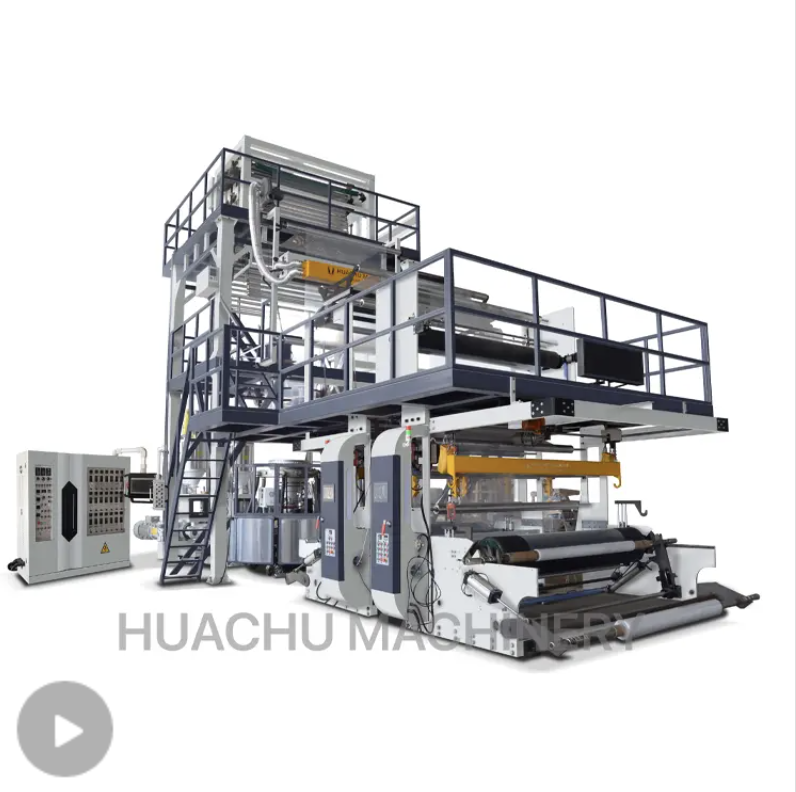
How the Machine Operates
The operation of a high-speed three-layer ABA film blown machine involves several coordinated steps:
1. Material Feeding: Different polymer resins are fed into separate extruders. The outer extruders handle the 'A' layers, often made from high-quality polyethylene, while the middle extruder processes the 'B' layer, which could include recycled material or additives for specific properties.
2. Co-extrusion: The molten polymers are combined through a specially designed die head that merges the three layers into a single tubular film. The ABA structure is maintained to ensure each layer performs its function.
3. Blowing Process: The tubular film is inflated by air pressure to form a bubble. This bubble expands to the desired diameter, controlling film thickness and width.
4. Cooling and Stabilizing: The bubble passes through cooling rings that solidify the film uniformly. Proper cooling prevents defects and maintains film clarity.
5. Collapsing and Winding: After cooling, the bubble collapses into flat film sheets. These sheets are then wound onto rolls for further processing or shipment.
6. Quality Monitoring: Sensors and cameras continuously monitor film thickness, bubble stability, and surface quality. Adjustments are made automatically to maintain consistent output.
The high-speed operation demands precise synchronization of these steps to avoid defects like uneven thickness, pinholes, or film breaks. Modern machines incorporate automation and feedback systems to optimize performance and reduce downtime.
Tip: Regularly calibrate the extrusion die and cooling system to maintain uniform film thickness and prevent production stoppages caused by film defects.
Benefits of Using the High-Speed Three-layer ABA Film Blown Machine
Enhanced Production Efficiency
The high-speed three-layer ABA film blown machine significantly boosts production efficiency by enabling faster output rates without compromising film quality. Operating at speeds up to 400 meters per minute, it surpasses traditional single- or dual-layer machines, allowing manufacturers to meet tight deadlines and large-volume orders more effectively.
Its precise layer thickness control minimizes material waste and reduces the need for frequent adjustments, which cuts downtime. The computerized control system automatically monitors and adjusts temperature, speed, and film thickness, ensuring consistent production runs with fewer defects. This automation reduces manual intervention, freeing operators to focus on other critical tasks.
Moreover, the integrated quality monitoring system detects issues like uneven thickness or bubble instability early, preventing extended production of defective film. Rapid cooling systems stabilize the film quickly, allowing for faster winding and packaging stages downstream. These features combine to streamline the entire manufacturing process, enhancing throughput and reliability.
Cost Savings and Resource Optimization
Beyond speed, the ABA film blown machine helps lower production costs by optimizing material usage and energy consumption. The three-layer co-extrusion design allows use of recycled or lower-cost materials in the inner 'B' layer without sacrificing outer layer strength or appearance. This reduces raw material expenses while maintaining product performance.
Energy-efficient motors and drives consume less power, lowering operational costs. The machine’s advanced cooling system also reduces energy waste during solidification. By minimizing film defects and scrap rates, it cuts costs associated with reprocessing or discarding substandard products.
Additionally, the machine’s ability to produce wider film rolls reduces the number of changeovers needed, saving time and labor. The consistent film quality also enhances downstream packaging efficiency, as fewer breaks or weak spots occur during handling or shipping.
In short, this machine supports sustainable manufacturing practices by reducing waste, energy use, and material costs, all while delivering high-quality film products.
Tip: Regularly maintain and calibrate the machine’s sensors and control systems to maximize production efficiency and minimize costly downtime.
Technological Advancements in ABA Film Blown Machines
Comparison with Traditional Film Blown Machines
The high-speed three-layer ABA film blown machine offers several technological improvements over traditional film blown machines. Traditional models often use single or dual-layer extrusion, limiting the film's performance and application range. In contrast, the ABA machine’s three-layer co-extrusion system allows for tailored film properties by combining different materials in each layer, enhancing strength, flexibility, and barrier qualities.
Speed is another critical advancement. Traditional machines typically run at lower speeds, around 200-250 meters per minute, while the high-speed ABA machine can reach speeds up to 400 meters per minute or more. This increase in speed directly translates to higher production output and better efficiency.
Automation and control systems also set the ABA machine apart. Older machines rely heavily on manual adjustments, which can lead to inconsistencies and more downtime. The high-speed ABA machine integrates computerized controls for temperature, speed, and thickness, enabling real-time monitoring and adjustments. This reduces defects and material waste, improving overall product quality.
Energy efficiency is improved too. The ABA machine uses advanced motors and optimized cooling systems that consume less power compared to traditional setups. This not only lowers operating costs but also supports sustainable manufacturing practices.
Innovations in Film Blowing Technology
Recent innovations in ABA film blown machines focus on enhancing precision, reducing waste, and expanding film functionality. One key innovation is the development of advanced die heads that enable more precise layer distribution. This ensures uniform thickness and better adhesion between layers, improving film durability and performance.
Improved cooling technology is another breakthrough. Modern ABA machines use enhanced cooling rings and air management systems that solidify the film faster and more evenly. This reduces bubble instability and film defects, enabling higher speeds without sacrificing quality.
Integration of sensors and AI-driven feedback loops represents a significant technological leap. These systems continuously analyze film parameters such as thickness, tension, and bubble shape. They automatically adjust process variables to maintain optimal conditions, minimizing downtime and reducing operator intervention.
Material innovation also plays a role. The ABA machine can process a wider range of polymers, including recycled materials and specialty additives, allowing manufacturers to create films tailored for specific applications like enhanced barrier films or biodegradable options.
Finally, improved winding systems have been developed to handle high-speed film output smoothly. These systems reduce film tension variations and prevent roll defects, ensuring consistent roll quality ready for downstream processing.
Tip: Invest in regular software updates and sensor calibrations to fully leverage the automation and precision features of modern ABA film blown machines, boosting production consistency and reducing waste.
Applications of ABA Film Blown Machines
Industries Benefiting from ABA Film Blown Machines
The high-speed three-layer ABA film blown machine serves a wide range of industries due to its versatility and superior film quality. Its ability to produce durable, flexible, and barrier-enhanced films makes it ideal for packaging, agriculture, and industrial sectors.
● Packaging Industry: ABA films are widely used for food packaging, medical supplies, and consumer goods. The outer 'A' layers provide strength and gloss, which enhance product appearance, while the middle 'B' layer offers excellent barrier properties to protect contents from moisture, oxygen, and contaminants. This is crucial for maintaining freshness and extending shelf life.
● Agriculture: Films produced by ABA machines are used as mulch films, greenhouse covers, and silage wraps. They protect crops by controlling temperature, moisture, and weed growth. The machine's precise layer control allows customization for UV protection or biodegradability, meeting environmental standards.
● Industrial Applications: ABA films serve as protective sheeting, shrink films, and liners. Their toughness and resistance to punctures make them perfect for heavy-duty uses. The three-layer structure allows combining recycled materials in the core layer, reducing costs while maintaining outer layer performance.
● Healthcare and Hygiene: The medical industry benefits from ABA films in sterile packaging, barrier wraps, and disposable gloves. The films meet strict hygiene standards and provide reliable protection against contamination.
Case Studies and Real-world Examples
● Food Packaging Company: A major food packaging firm switched from a traditional dual-layer machine to a high-speed three-layer ABA film blown machine. This change resulted in a 35% increase in production capacity and reduced material waste by 20%, thanks to precise thickness control and the ability to use recycled content in the middle layer without compromising film quality.
● Agricultural Film Manufacturer: An agricultural film producer customized ABA films for UV resistance and biodegradability. The high-speed machine enabled them to meet seasonal demand spikes efficiently. Their films improved crop yields by maintaining optimal soil temperatures and moisture levels, demonstrating the machine's impact on product performance.
● Industrial Packaging Supplier: An industrial packaging supplier used ABA machines to produce stretch films with enhanced puncture resistance. This upgrade reduced film breakage during transport by 40%, leading to fewer product damages and customer complaints.
● Medical Device Manufacturer: A healthcare company adopted ABA films for sterile packaging of surgical instruments. The films provided superior barrier properties and clarity, ensuring product safety and easy inspection. The machine’s automation reduced labor costs and improved batch consistency.
These examples highlight how the high-speed three-layer ABA film blown machine adapts to diverse needs, delivering efficiency and quality improvements across industries.
Tip: Tailor the ABA film layers to your industry’s specific requirements for optimal performance and cost-effectiveness.
Challenges and Solutions in Using ABA Film Blown Machines
Common Issues Faced by Manufacturers
Despite their advanced design and efficiency, high-speed three-layer ABA film blown machines present some challenges manufacturers often encounter:
● Film Breakage and Bubble Instability: At high speeds, maintaining a stable bubble is crucial. Instability can cause film breaks, leading to downtime and material waste.
● Uneven Layer Thickness: Precise control of each layer’s thickness is vital for film quality. Variations can result in weak spots or inconsistent barrier properties.
● Die Head Clogging: Polymer blends or additives sometimes cause the die head to clog, disrupting the co-extrusion process and causing defects.
● Material Compatibility Issues: Using recycled or specialty polymers in the 'B' layer can sometimes lead to adhesion problems or reduced film performance.
● Maintenance Complexity: The three-layer co-extrusion setup and high-speed operation require frequent calibration and maintenance, which can be time-consuming.
● Energy Consumption Spikes: Although energy-efficient, operating at very high speeds can increase power demands temporarily, affecting operational costs.
● Operator Skill Requirements: Advanced automation reduces manual tasks but requires skilled operators to interpret data and manage troubleshooting effectively.
Effective Strategies for Overcoming Challenges
Manufacturers can adopt several approaches to mitigate these challenges and optimize the use of ABA film blown machines:
● Regular Calibration and Preventive Maintenance: Schedule frequent checks on the die head, cooling rings, and sensors. This prevents clogging and ensures consistent layer thickness.
● Use of Advanced Automation and AI Systems: Implement AI-driven feedback loops that adjust parameters in real time to stabilize bubble size and maintain uniform film properties.
● Material Testing and Compatibility Checks: Before production, thoroughly test recycled or additive-containing resins to ensure proper adhesion and extrusion behavior.
● Operator Training and Skill Development: Invest in comprehensive training programs so operators can effectively manage the machine’s control system and respond to alerts promptly.
● Optimized Cooling and Air Flow Management: Enhance cooling ring performance and air circulation to stabilize the bubble and reduce film defects at high speeds.
● Energy Management Practices: Monitor energy usage patterns and adjust machine settings during peak loads to balance speed and power consumption efficiently.
● Spare Parts Inventory and Rapid Response Plans: Keep critical spare parts on hand and establish quick repair protocols to minimize downtime during unexpected failures.
By addressing these issues proactively, manufacturers can fully leverage the benefits of high-speed ABA film blown machines while minimizing disruptions and costs.
Tip: Implement a routine preventive maintenance schedule combined with operator training to reduce downtime and maintain consistent film quality on ABA film blown machines.
Future of High-Speed Three-layer ABA Film Blown Machines
Predicted Trends and Developments
The future of high-speed three-layer ABA film blown machines looks promising, driven by ongoing technological innovation and evolving market demands. One key trend is the integration of artificial intelligence (AI) and machine learning to enhance process control. These smart systems will predict and adjust parameters in real time, reducing defects and optimizing energy use.
Another development is the push toward sustainability. Machines will increasingly support biodegradable and recycled polymers, helping manufacturers meet stricter environmental regulations. Enhanced compatibility with eco-friendly materials will become standard, allowing producers to reduce their carbon footprint without sacrificing film performance.
Speed and precision will continue to improve. Expect machines capable of even higher output rates, surpassing current limits of 400 meters per minute. Advanced die designs and cooling technologies will enable thinner films with consistent quality, saving raw materials and lowering costs.
Automation will expand beyond production to include predictive maintenance and remote diagnostics. This will minimize downtime and extend machine lifespan. User interfaces will become more intuitive, empowering operators with better data visualization and control.
Lastly, modular designs will offer greater flexibility. Manufacturers can customize machines easily to switch between film types or layer structures, accommodating diverse product lines and market needs.
Impact on the Manufacturing Industry
These advancements will reshape the manufacturing landscape significantly. Higher speeds and better quality will boost throughput, enabling companies to meet growing demand faster. Reduced waste and energy consumption will lower operational costs and support green manufacturing goals.
The ability to process recycled and biodegradable materials aligns with global sustainability initiatives, helping manufacturers comply with regulations and appeal to eco-conscious consumers. This can open new market opportunities and improve brand reputation.
Automation and smart features will reduce reliance on manual labor, cutting human error and improving safety. Skilled operators will shift focus toward monitoring and optimization rather than routine tasks, enhancing workforce productivity.
Flexible machine configurations mean manufacturers can respond quickly to changing customer demands or product innovations. This agility is crucial in competitive markets where customization and speed to market matter.
Overall, the evolution of high-speed three-layer ABA film blown machines will drive efficiency, sustainability, and innovation, positioning manufacturers for long-term success.
Tip: Embrace AI-driven automation and eco-friendly material compatibility when upgrading ABA film blown machines to future-proof production and reduce environmental impact.
Conclusion
The high-speed three-layer ABA film blown machine enhances production efficiency through advanced design and automation. It significantly increases output rates, reduces material waste, and optimizes energy use. These machines are ideal for diverse industries, including packaging and agriculture, due to their ability to produce high-quality, durable films. By integrating AI and sustainable materials, they align with modern manufacturing trends. Companies like Wenzhou Huachu Machinery Co., Ltd. offer these machines, providing exceptional value in terms of speed, quality, and sustainability.
FAQ
Q: What is a High-Speed Three-layer ABA Film Blown Machine?
A: A High-Speed Three-layer ABA Film Blown Machine is an advanced device used to produce high-quality films with a three-layer co-extrusion system, enhancing strength, flexibility, and barrier properties.
Q: How does the High-Speed Three-layer ABA Film Blown Machine boost production efficiency?
A: It boosts efficiency by operating at speeds up to 400 meters per minute, reducing downtime and material waste, and ensuring consistent film quality through automated controls.
Q: Why is the High-Speed Three-layer ABA Film Blown Machine considered cost-effective?
A: It optimizes material usage, supports recycled materials in the 'B' layer, and uses energy-efficient systems, lowering production costs while maintaining high-quality output.


