Introduction
Have you ever had a bubble that looks stable, then suddenly drifts and ruins gauge? That kind of instability can turn into scrap, slowdowns, and missed delivery targets in minutes. On a Film Blowing Machine, cooling control is often the difference between smooth production and constant firefighting.
In this article, we explain what the IBC system is and why many plants use it to improve bubble stability and cooling capacity. You will learn how it works, what film quality gains to expect, and how to decide if it makes sense for your line. We will also cover practical tuning and maintenance ideas you can apply right away.
What Is an IBC System in a Film Blowing Machine?
Simple definition in plain terms
IBC is a closed air loop for the bubble interior. It removes hot air from inside the bubble, cools it in a heat exchanger, then sends it back. This cycle runs during production, so the bubble gets internal cooling, not only external cooling. Many operators call it “bubble air conditioning,” because it actively manages internal heat.
IBC can run on mono-layer lines and multilayer lines. It is common on HDPE, LDPE, and LLDPE recipes. It becomes more useful as film gets thinner, wider, or faster.
What problems it is designed to solve
Blown film always fights one limit: cooling capacity. External cooling works on the surface, but heat also stays inside the bubble. That trapped heat pushes the frost line higher and keeps the tube soft. Soft film is harder to control, so speed must drop.
IBC removes part of the internal heat load. It also helps reduce breathing and random bubble swings. When internal pressure and temperature stay steady, the bubble stays calmer. That stability helps gauge control and roll quality.
What IBC is not (common misunderstandings)
IBC is not a resin fix. It will not solve wet pellets or dirty pellets alone. It is also not a cure for bad die alignment. If your die gap is uneven, gauge issues remain. If your air ring is clogged, stability still suffers.
IBC is a control tool, not magic. You still need tuning, logging, and validation. After changes, you should re-check sealing and strength targets.
Note:IBC improves control, but good resin and clean hardware still matter most.
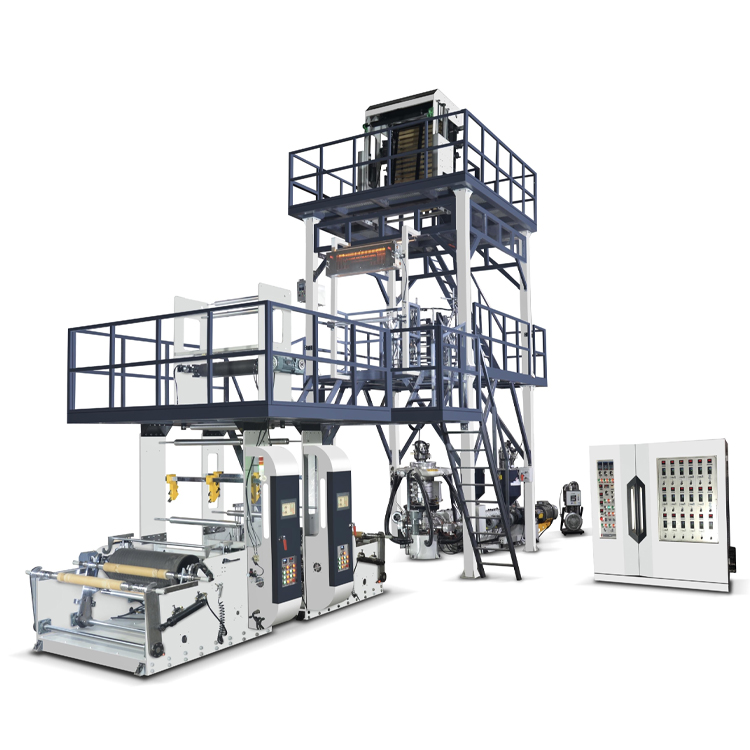
Where IBC Fits in the Blown Film Line
Relationship to die, bubble, frost line, and haul-off
The line works as one connected system. The die forms the molten tube. The air ring cools the outside. IBC cools the inside. The frost line shows where film turns solid. The haul-off sets draw speed and tension.
If the frost line is too high, film stays soft. Soft film can wrinkle and stick at the frame. If the frost line is too low, orientation changes. That shift can alter sealing and tear balance. IBC helps place the frost line in a stable zone.
IBC vs air ring: internal vs external cooling
The air ring removes heat from the outside surface. It also affects bubble stability through airflow balance. IBC removes heat from the inside air volume and inner boundary layer. When both are tuned well, they support each other. The air ring keeps the surface calm. IBC adds cooling capacity and steadier internal conditions.
Here is a practical comparison.
Item | External Air Ring | IBC (Internal Bubble Cooling) |
Main role | Cool outside surface | Cool inside air and inner surface |
Best impact | Surface stability, frost line shape | Higher speed, calmer bubble |
Typical controls | Airflow, lip geometry, air temp | Flow rate, air temp, pressure |
Common limits | Turbulence, ambient changes | Leaks, filter load, duct losses |
Best fit | Standard films, moderate speeds | Thin films, wide layflat, high output |
Typical IBC configurations (mono, ABA/ABC co-extrusion)
Mono-layer lines often use simpler IBC loops. They may use fewer sensors and smaller exchangers. Co-extrusion lines often need more cooling capacity, since output and heat load are higher. ABA lines can benefit as well, since the middle layer may include recycled resin or CaCO3. Those changes can shift viscosity and heat behavior during a shift. IBC helps reduce process swings when inputs drift.
Tip:Size IBC capacity for real output and heat load, not for “nameplate power.”
How the IBC System Works (Step-by-Step)
Air exchange logic: remove hot air, return cooled air
Inside the bubble, air heats up fast near the die. Without circulation, it stays hot and slows cooling. IBC pulls some air out, cools it, then returns it. The exchange rate is a key knob. Higher exchange removes more heat, but too much flow can create turbulence. Good tuning targets calm flow and stable cooling.
Control loop basics: temperature, pressure, and flow stability
Most IBC systems use closed-loop control. Sensors read internal temperature and pressure. A controller compares them to setpoints. Then it adjusts fan speed, valves, or bypass flow. Stable temperature gives stable cooling. Stable pressure supports stable bubble size. Stable flow reduces oscillations and breathing.
Bubble size and layflat control: sensors and feedback
Many lines add diameter or layflat sensors. They watch bubble size in real time. When size drifts, the controller corrects internal pressure or flow. That feedback matters in converting. Bag making and printing need consistent width. A stable bubble also helps reduce edge gauge drift.
Cooling balance: matching IBC and air ring settings
IBC does not replace the air ring. They must work together. If you increase IBC, you may reduce air ring airflow to avoid turbulence. If the air ring is too aggressive, bubble flutter can rise. If both are too weak, the frost line climbs and film stays soft.
A simple method helps. First, tune the air ring for a calm bubble. Second, stabilize IBC temperature and pressure. Third, raise output step by step. During tuning, watch frost line, gauge, and optics.
Start-up and recipe change: how IBC reduces scrap
Start-up scrap often comes from unstable cooling. The bubble grows, shrinks, then settles. Gauge swings follow. IBC can shorten the path to stable internal conditions. That often reduces off-spec meters at start-up.
Recipe changes can also be smoother. New resin changes melt behavior and cooling demand. IBC helps hold internal temperature steadier, so the system settles faster. This can reduce changeover waste in busy plants.
Film Quality Improvements You Can Expect
Gauge uniformity and thickness stability
Gauge control is a direct profit lever. Better gauge means less resin giveaway and fewer rejects. IBC improves gauge indirectly by stabilizing the bubble and cooling profile. When the bubble is calm, the die and air ring perform more consistently.
Results depend on basics. Die condition, air ring cleanliness, and operator routines still lead. Yet IBC often tightens thickness drift over time and reduces random spikes.
Bubble stability: fewer flutter and oval bubble events
Flutter often increases as speed rises. It can come from external turbulence or internal pressure swings. IBC can reduce pressure swings and improve internal cooling uniformity. That often lowers the risk of breathing and surging.
Oval bubble shape can come from uneven cooling around the circumference. If cooling imbalance is the cause, IBC can help keep the bubble rounder. If the die is damaged, you still need mechanical repair.
Optical properties: haze, gloss, and clarity trade-offs
Cooling rate affects crystal growth and surface texture. In many PE films, faster and more even cooling can reduce haze and improve consistency. Yet overly aggressive cooling can raise internal stress. Stress can affect gloss and shrink. So you should validate optics after major changes.
Shrinkage and dimensional stability for converting
Converters want stable rolls and stable width. IBC can improve layflat consistency and reduce drift, so tension settings stay steadier. Still, cooling changes can shift orientation balance. That can change seal strength and tear behavior. A quick lab check after tuning is a smart habit.
Tip:After IBC tuning, re-check seal strength, tear balance, and shrink targets.
Productivity, Waste, and Energy Impact
Higher speed: what “more cooling” really enables
Cooling sets the speed ceiling. If film stays molten too long, it becomes unstable. IBC removes internal heat, so you can raise output while keeping a safe frost line. In some cases, you keep output and gain stability instead. Both outcomes can create business value.
Thin films and wide layflat products often gain more. Thicker films may gain less, since surface cooling already does most of the work. Your best proof is a controlled trial on your top SKU.
Waste reduction: fewer off-spec meters
Scrap often hides in small instability events. A bubble wobble can trigger a speed change. Then gauge shifts and a roll segment becomes off-spec. IBC can reduce those events by stabilizing internal conditions. It can also reduce start-up time, so you make sellable film earlier.
Energy view: when IBC helps, and when it costs
IBC uses fans and sometimes chillers, so it adds load. Yet it may allow lower external airflow and less scrap. The right metric is kWh per kg of sellable film. You should measure that during trials. In many plants, scrap reduction offsets added fan power.
A simple ROI checklist for buyers
ROI gets clearer when you track a few numbers. Use output gain, scrap rate, downtime, and energy per kg. Add quality claims too, since returns are costly and painful.
ROI Driver | What to Measure | Why It Matters |
Output gain | kg/hour before vs after | More capacity per shift |
Scrap rate | % off-spec meters | Less resin giveaway |
Downtime | minutes per week | More stable schedules |
Energy per kg | kWh/kg sellable film | True operating cost |
Quality claims | complaints and returns | Protects margin and brand |
Tip:Model ROI using your own data, then confirm it in a real run.
IBC vs OBC (External Cooling): Which Should You Choose?
When external cooling is enough
Many standard films run well on external cooling alone. If the frost line is stable and gauge is in control, IBC may not be needed. If the main problem is resin moisture, contamination, or die wear, fix those first. Upgrades work best after basics are stable.
When IBC becomes the bottleneck-breaker
IBC is strongest when cooling is the real bottleneck. Thin films, high-speed packaging, and wide layflat often fit. Multi-layer structures can fit too, since heat load is higher. If you see a high frost line even at safe air ring settings, IBC is a strong candidate. If you see breathing during speed ramps, internal control can help.
Dual cooling strategy: tuning both sides
Dual cooling needs a method. Start by setting the air ring for calm behavior. Then stabilize IBC temperature and pressure. After that, increase speed in steps and watch bubble motion, frost line, and gauge. If a defect appears, change one variable at a time. This discipline reduces downtime and builds a strong recipe library.
Material notes: HDPE, LDPE, LLDPE, multilayer
HDPE often runs fast, so IBC can help on thin bag film. LLDPE can be sensitive in some grades, so stable frost line placement helps handling. LDPE is often stable, but thick LDPE may see smaller gains. For multilayer films, keep recipes organized by structure. Heat load changes when layer ratios change. If your line uses recycled resin or CaCO3 in a core layer, IBC can help keep stability during normal batch variation.
Spec, Operate, and Maintain an IBC Film Blowing Machine
What to ask vendors: controls, sensors, recipes, service
Ask how the IBC loop is controlled and tuned. Ask which sensors are included and how calibration is handled. Ask about leak testing, filter access, and exchanger cleaning. Also ask about service response and spare parts. These details often decide long-term uptime.
Operator best practices: setpoints and logging
Operators need simple routines. They should confirm bubble size and layflat early. They should verify IBC pressure and temperature setpoints. They should also confirm air ring balance and haul-off tension. Logging the first stable roll creates a reference for the next shift. It also speeds up troubleshooting when trends drift.
Maintenance essentials: filters, ducts, calibration, leaks
Filters are critical in IBC loops. When they load, flow drops and cooling weakens. That can push the frost line higher and reduce stability. Leaks also matter, since they disrupt pressure control and reduce cooling efficiency. A good maintenance plan includes filter checks, duct inspections, leak tests, and sensor calibration.
Troubleshooting map: symptoms and quick fixes
A simple symptom map saves time. It helps teams act fast and reduces trial-and-error.
Symptom | Likely Cause | Quick Fix |
Bubble breathing | Control loop hunting | Reduce gain, verify sensors |
Frost line rises | Low flow, filter load | Replace filter, check fan |
Oval bubble | Cooling imbalance | Balance air ring, check leaks |
Haze increases | Cooling too aggressive | Reduce IBC, re-tune air ring |
Layflat drift | Pressure drift or leaks | Leak test, recalibrate sensor |
Conclusion
IBC helps a Film Blowing Machine cool the bubble from inside, so it can run faster and stay more stable. When internal temperature and pressure stay steady, we often see better gauge control, fewer bubble swings, and less start-up scrap.
For plants that need higher output or tighter film quality, choosing the right configuration and keeping good maintenance habits matters. Wenzhou Huachu Machinery Co., Ltd. supports these goals by providing reliable Film Blowing Machine solutions, including multilayer options that help users improve stability, reduce material loss, and keep production consistent.
FAQ
Q: What is the IBC system in a Film Blowing Machine?
A: IBC stands for Internal Bubble Cooling. In a Film Blowing Machine, it removes hot air from inside the bubble, cools it, and returns it to improve cooling and stability.
Q: How does an IBC Film Blowing Machine improve film quality?
A: An IBC Film Blowing Machine can improve gauge stability and reduce bubble breathing, which often lowers scrap and helps keep roll width more consistent.
Q: Why do some lines still need an air ring if they have IBC?
A: IBC cools from the inside, while the air ring cools the outside surface. On a Film Blowing Machine, using both often gives better balance and fewer stability issues.
Q: Is IBC worth the cost for every Film Blowing Machine?
A: Not always. It usually pays back faster on thin films, wide layflat, or high-speed production where cooling limits output on a Film Blowing Machine.
Q: What should I check first if IBC stability gets worse?
A: Start by checking filters, air leaks, and sensor calibration. On a Film Blowing Machine, low IBC airflow or pressure drift often comes from filter loading or leakage.


