Sustainable packaging is no longer a niche request—it has become a practical requirement in many consumer, logistics, and retail supply chains. Brands want packaging that uses less virgin resin, includes recycled content, maintains product protection, and still runs efficiently on high-speed converting and packing lines. For film producers, this creates a real challenge: recycled materials can vary in melt behavior, contamination tolerance, odor, and mechanical consistency, yet customers still expect stable film quality and reliable performance. This is exactly where an ABC Film Blowing Machine becomes a valuable production tool. By using three-layer co-extrusion, an ABC structure allows manufacturers to balance performance and sustainability more intelligently than single-layer designs.
What Is an ABC Blown Film Machine?
An ABC Film Blowing Machine is a blown film extrusion system that produces film using three extruders and a co-extrusion die to form a three-layer film structure—commonly described as:
The key advantage of this structure is control. Instead of forcing one resin to do everything, the producer can assign different roles to different layers. This helps film makers design packaging with more stable performance—especially when recycled materials are part of the resin mix.
Why Three-Layer ABC Structures Support Sustainable Packaging
Sustainable packaging is often about achieving multiple goals at the same time:
reduce virgin resin use
incorporate recycled content
maintain mechanical strength
maintain sealing performance
keep film processability stable
meet customer expectations for appearance and converting
A three-layer film structure helps because each layer can be optimized for a specific job.
How ABC layering typically helps
One layer can focus on sealability and converting compatibility.
Another layer can focus on strength, stiffness, or puncture resistance.
The middle layer can be used as a recycled-content carrier while outer layers protect surface quality and process stability.
This is one of the most practical reasons ABC blown film machines are frequently discussed in connection with sustainable film projects.
Using Recycled Materials More Wisely Through Layer Design
Recycled resin is not always uniform. Even when supply quality is controlled, recycled content can introduce variation in:
melt flow behavior
gel or black speck risk
odor level
mechanical consistency
color and clarity
With single-layer film, these variations show up directly on the film surface and can immediately impact customer acceptance. With ABC blown film machines, producers can design the structure so recycled content plays a role without dominating the visible surfaces.
A practical approach many producers use
This does not mean recycled content is “hidden” in a dishonest way—it means it is used in the most practical layer position where it can contribute to sustainability while the film still performs reliably.
Example layer role table
Layer | Typical Role in Packaging Film | Why It Matters for Recycled Content |
A (outer) | print surface, scuff resistance, appearance | protects surface quality |
B (core) | bulk strength, stiffness, cost control | good place for recycled resin |
C (inner) | sealing surface, contact layer | supports stable sealing |
This layered strategy is often the difference between a recycled-content film that runs smoothly and one that causes frequent customer complaints.
Why ABC Blown Film Machines Help Balance Film Performance
When packaging films include recycled content, buyers usually still expect:
stable thickness and gauge control
consistent sealing behavior
adequate tensile and tear strength
puncture resistance for logistics packaging
repeatable converting performance
ABC structures help balance these needs because they allow producers to adjust the recipe without changing everything at once.
Performance balance example
Packaging Requirement | Common Film Solution Using ABC Structure |
Strong seal performance | optimize C layer resin for sealing |
Better stiffness | add stiffness focus in B layer |
Better print surface | use A layer resin suited for printing |
More recycled content | increase recycled resin percentage in B layer |
Stable running | keep outer layers more consistent |
Instead of one resin doing all jobs, the machine gives producers a practical “toolbox” to tune film behavior.
Typical Sustainable Packaging Applications for ABC Blown Film
ABC blown film machines are commonly used in packaging categories where strength and process stability matter:
shopping bags and carry bags
e-commerce and courier mailers
stretch hood and pallet wrap structures (depending on design)
heavy-duty liner bags
garbage bags and waste handling films
agricultural and industrial packaging films
protective packaging films for logistics
These applications often accept recycled content when the film still delivers practical performance and stable converting behavior.
Key Process Challenges When Running Recycled Materials
While layer design helps, recycled resin still changes production behavior. In practical factory operation, some common challenges include:
A Melt stability and flow variation
Recycled resin can have wider melt flow variation. This can affect bubble stability, thickness uniformity, and output consistency.
B Contamination and gels
Even small contamination can create gels or specks that show on film surfaces or cause weak points.
C Odor and color control
Some packaging categories are sensitive to odor and appearance. Layer design can help reduce surface exposure, but material selection and process discipline remain important.
D Filter and screen pack management
When processing recycled resin, filtration strategy becomes more important to protect die flow consistency.
Practical Strategies for Better Results on ABC Blown Film Lines
From our experience, the best results come from combining machine capability with production discipline.
A Use recycled resin in a controlled layer ratio
Start with lower ratios in the B layer and increase gradually as quality data supports it.
B Maintain stable temperature and pressure control
Recycled resin may be more sensitive to thermal history. Stable temperature zones reduce variation in output.
C Support melt filtration planning
Screen packs and filtration approaches should match resin quality and production targets.
D Keep layer function clear
If your inner layer is the sealing layer, protect it. Do not overload it with recycled content if it causes sealing instability.
E Monitor thickness uniformity
Stable gauge control becomes even more important when resin variability increases.
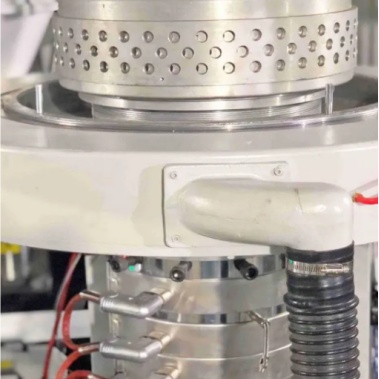
Why Machine Design Matters for Sustainable Film Production
When producing recycled-content film, machine stability often becomes a deciding factor. In practice, producers benefit when the line supports:
stable extrusion output
consistent cooling and bubble control
easy recipe adjustment
reliable layer distribution
operator-friendly monitoring and control
An ABC film blowing machine gives more design flexibility, but stable machine execution is what turns flexibility into consistent production.
How to Choose an ABC Blown Film Machine for Recycled Materials
When buyers evaluate an ABC Film Blowing Machine for sustainable packaging projects, we recommend focusing on practical questions:
What recycled resin type and quality will you use?
What recycled content percentage is realistic for your market?
Which layer should carry recycled content in your film design?
What product thickness range and width do you need?
How important is sealing performance vs stiffness vs surface appearance?
What stability level do you need to reduce downtime?
Selection planning table
Question | Why It Matters |
Recycled resin quality | affects filtration and stability needs |
Target recycled content % | determines layer strategy |
Film application | defines performance priorities |
Output and width | defines machine sizing |
Sealing requirements | defines inner layer design |
Surface appearance needs | defines outer layer control |
A good machine choice is the one that supports your real product plan, not just theoretical capability.
Final Thoughts
Sustainable packaging and recycled materials are shaping the future of film production, but success depends on practical engineering—balancing recycled content with stable film performance. An ABC Film Blowing Machine provides a strong platform for this because three-layer co-extrusion allows producers to assign different roles to different layers. In many projects, recycled materials can be used more effectively in the core layer while outer layers protect sealing stability and surface quality. This layered approach supports a more reliable path toward recycled-content films that still meet the expectations of packaging buyers and converting lines.
At Wenzhou Huachu Machinery Co., Ltd., we support film manufacturers who are developing sustainable packaging structures and looking for practical blown film solutions for recycled materials. If you are planning an ABC blown film project and want to discuss machine configuration, layer structure strategy, and production stability for recycled-content films, you are welcome to learn more from Wenzhou Huachu Machinery Co., Ltd. and contact us for further information.
FAQ
1) Why are ABC blown film machines useful for sustainable packaging?
Because three-layer structures allow producers to balance sealing, strength, and surface quality while incorporating recycled materials more strategically.
2) Where is recycled resin usually placed in an ABC film structure?
In many practical designs, recycled resin is placed in the B core layer, while A and C layers help maintain surface appearance and sealing stability.
3) Can recycled materials reduce film performance?
They can introduce variability, so layered design, filtration planning, and stable process control are important to maintain consistent film behavior.
4) What should I consider when choosing an ABC film blowing machine?
Consider your film application, target recycled content percentage, resin quality, required sealing performance, output capacity, and thickness control needs.


