Introduction
Have you ever wondered how the films used in everyday packaging are made? The process behind Blown Film Extrusion is key to creating high-quality films for various applications, including packaging and agriculture.
In this article, we’ll dive into the Blown Film Extrusion process, explore its diverse applications, and highlight the technological innovations driving the industry forward. You’ll learn how Film Blowing Machines optimize this process to create superior films with specific properties and performance capabilities.
The Blown Film Extrusion Process
Extrusion and Bubble Formation
Blown film extrusion begins by melting the polymer and feeding it through a heated extruder. As the molten polymer exits the die, it is inflated by air to form a bubble. This air inflation process is critical in creating a film of the desired thickness and strength. The key to controlling the bubble's size and shape lies in the Blow-Up Ratio (BUR), which is the ratio of the diameter of the bubble to the diameter of the die. By adjusting the BUR, manufacturers can control the film's thickness, strength, and overall properties.
The Film Blowing Machine plays a pivotal role in ensuring that the bubble forms uniformly. If the air pressure or temperature is not precisely controlled, the bubble can become uneven, leading to a non-uniform thickness and potential defects. Adjusting the extrusion speed, air pressure, and die temperature are crucial for achieving a stable bubble that will produce a high-quality film. Additionally, the material flow rate must be consistent to maintain a continuous and smooth extrusion.
Tip: To optimize the Blown Film Extrusion process, ensure that your Film Blowing Machine has precise control over air pressure, temperature, and extrusion speed. These factors will help achieve consistent bubble formation and improve the final film quality.
Cooling and Solidification
Once the film bubble has been inflated to the desired size, the next critical step is cooling the film to solidify it. The cooling process occurs through air rings and other cooling mechanisms that surround the film bubble. As the film exits the die, controlled cooling ensures that it retains its shape and that the film thickness remains consistent across its surface.
The frost line is the point at which the film begins to solidify and can no longer stretch. It is crucial for the cooling system to maintain the right balance, as any variations in the cooling rate can result in thickness discrepancies or defects in the final product. Uneven cooling can also cause issues like wrinkles or bubbles in the film. Ensuring an even and consistent cooling rate will result in a smooth, uniform film that is suitable for further processing or use.
The role of the Film Blowing Machine in this process is significant, as it can adjust the cooling air flow and ensure that the film remains at the ideal temperature for solidification. Real-time monitoring of the cooling rate and air ring positioning helps manufacturers maintain optimal film quality.
Tip: Maintain optimal air ring cooling and monitor the frost line closely to ensure uniform film thickness and prevent defects during the cooling process.
Collapsing and Winding
After cooling, the next stage in the Blown Film Extrusion process is the collapsing of the bubble and winding it into rolls. The film, now solidified, is pulled down by rollers at the correct traction speed. It is critical that the traction speed is synchronized with the extrusion speed to avoid stretching the film too much, which could lead to defects like wrinkles or thinning.
The collapsing process helps reduce the film’s diameter to make it suitable for winding and further processing. The film is then wound onto large rolls, which are further processed for uses such as printing, lamination, or cutting into smaller pieces for packaging. If the winding process is not handled properly, the film could end up with irregularities, causing issues during later stages of production or in final applications.
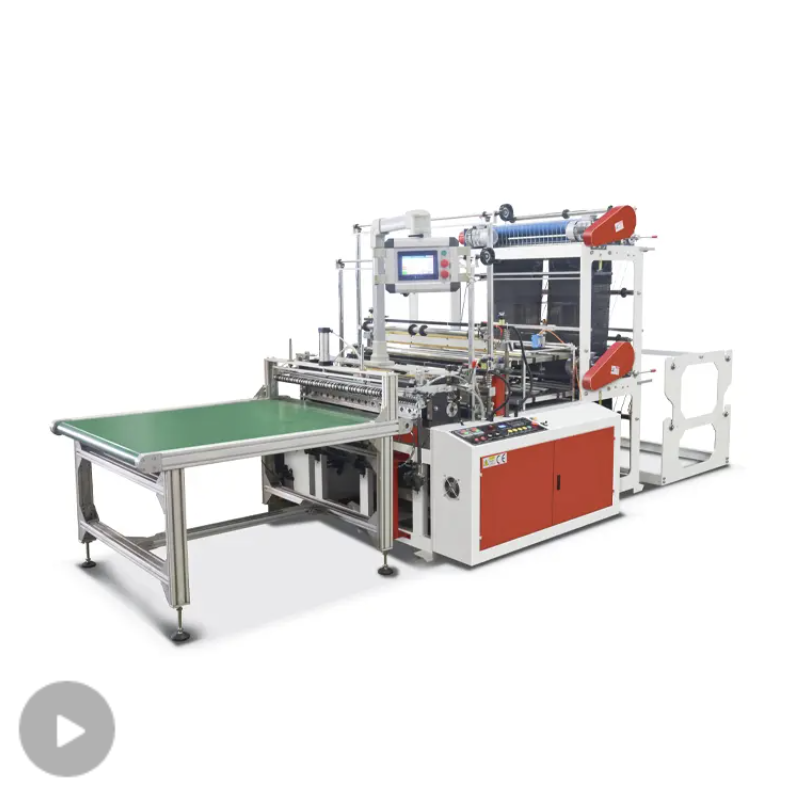
The Film Blowing Machine is equipped with advanced winding systems that ensure the film is wound evenly and securely. Automated systems can monitor the winding tension and adjust it to prevent over-tightening or slackness, both of which can result in defects in the final film.
Key Process Parameters
Blow-Up Ratio (BUR)
The Blow-Up Ratio (BUR) plays a significant role in defining the final properties of the film. It is essentially the ratio of the diameter of the bubble to the diameter of the die. A higher BUR results in thinner films, while a lower BUR produces thicker, stronger films. The BUR also affects film strength and flexibility. A higher BUR can lead to a thinner film, but it may also cause issues like film breakage or uneven film properties.
Achieving the right BUR requires careful adjustment of both air pressure and material flow rate. The Film Blowing Machine should allow operators to adjust the BUR to meet specific application requirements, whether for food packaging, industrial films, or agriculture. This fine-tuning ensures that the film produced meets the strength and durability requirements while maintaining the desired thinness.
Freeze-Line Height
The freeze-line height is another critical parameter that needs careful control. It refers to the height at which the film begins to cool and solidify. Maintaining the correct freeze-line height ensures that the film cools evenly and avoids creating uneven film thickness. An incorrectly set freeze-line height can lead to uneven cooling, which results in poor film quality, including defects such as thin spots and wrinkles.
By adjusting the freeze-line height appropriately, manufacturers can ensure that the film solidifies uniformly, preventing defects from forming during the cooling process. A stable freeze-line height helps to maintain consistent film quality, which is essential for producing films with precise thickness and mechanical properties.
Temperature Control
Effective temperature control is fundamental in ensuring the quality of the film. The melt temperature at the extrusion die must be maintained at a level that ensures smooth and uniform extrusion. Similarly, controlling the cooling temperature is essential for proper film formation. If the temperature of the melt is too high, it could degrade the polymer, while if it is too low, the extrusion may not flow smoothly.
Tip: To optimize Blown Film Extrusion, invest in advanced temperature sensors and real-time monitoring systems. This will ensure consistent film quality and reduce defects caused by temperature fluctuations.
Applications of Blown Film Extrusion
Packaging
Blown Film Extrusion is widely used in the packaging industry due to its ability to create films that are both strong and flexible. It is used in applications like food packaging, stretch films, shrink films, and pouches. The ability to produce multi-layer films has made it particularly useful for applications requiring enhanced barrier properties, such as for protecting food items from moisture and oxygen.
Multi-layer films are often co-extruded, combining different materials with distinct properties to create films that provide superior moisture and oxygen barriers, ensuring that the packaged products remain fresh for longer periods. This is especially beneficial for perishable food items that require extended shelf life.
Agriculture
Blown film extrusion is also used extensively in agriculture, where films are produced for greenhouse covers, mulching films, and agricultural wraps. These films help regulate temperature and moisture levels, creating a controlled environment for plants to thrive. Agricultural films made from blown film extrusion are also durable, providing protection against harsh weather conditions.
Recent innovations have introduced biodegradable films, which are increasingly being used to reduce environmental impact. These films are made from renewable resources and offer a sustainable alternative to traditional plastic films.
Industrial and Specialty Films
Blown film extrusion also finds applications in producing industrial films such as stretch hoods, industrial wraps, and medical packaging. These films are designed to be tough and durable, offering protection against the elements during transportation or storage. Medical packaging films need to meet stringent regulatory standards, providing barrier protection to prevent contamination and ensure the safety of pharmaceutical products.
Technological Innovations in Blown Film Extrusion
Multi-Layer Co-Extrusion
Multi-layer co-extrusion is one of the most significant innovations in Blown Film Extrusion. By combining multiple layers of different materials, manufacturers can create films that possess a combination of desirable properties. For instance, one layer may offer strength and toughness, while another provides barrier protection against moisture or oxygen.
This technology has greatly expanded the scope of blown films by allowing manufacturers to produce films with customized properties tailored to specific applications, such as food packaging or industrial films.
Eco-Friendly Innovations
As sustainability becomes increasingly important, blown film extrusion has evolved to incorporate eco-friendly innovations. Biodegradable films made from PBAT/PE and other sustainable materials are being developed to replace traditional plastics in various applications. These films are designed to break down over time, reducing the environmental impact of plastic waste.
Additionally, the use of recycled materials in blown films is growing, helping reduce the demand for virgin plastics and contributing to a more circular economy.
Automation and Control Systems
The integration of automation in Film Blowing Machines has revolutionized the industry. Automated systems can now adjust critical process parameters such as temperature, pressure, and airflow in real time. These improvements enhance precision, reduce waste, and allow for faster production cycles. Automated control systems also reduce the likelihood of human error, ensuring that film production is consistent and efficient.
Tip: Implementing automated systems in your Film Blowing Machines will help ensure consistency, improve film quality, and reduce overall production costs.
Challenges and Future Trends
Process Stability
The stability of the blown film process is a significant challenge, with factors such as temperature fluctuations, pressure variations, and uneven cooling all contributing to potential instability. Maintaining precise control over these factors is essential for consistent film production.
Material Compatibility
Blending different polymers in multi-layer films can lead to challenges related to material compatibility. Some polymers may have trouble bonding properly, leading to issues like phase separation. Overcoming these compatibility challenges is essential for producing high-quality multi-layer films.
Sustainability
The demand for sustainable films is rapidly increasing, particularly in industries like packaging and agriculture. Blown film manufacturers must adopt eco-friendly materials and recycling technologies to meet sustainability goals while maintaining the quality and performance of their films.
Conclusion
In conclusion, Blown Film Extrusion remains a critical process for producing films across multiple industries. By understanding the steps involved—from extrusion to cooling and winding—manufacturers can optimize their production lines to achieve better efficiency and higher-quality films. Innovations like multi-layer co-extrusion, eco-friendly materials, and automated control systems are shaping the future of the industry.
Wenzhou Huachu Machinery Co., Ltd. offers Film Blowing Machines equipped with advanced technology that improves production efficiency and ensures consistent, high-quality film output. Their expertise and cutting-edge machinery help manufacturers meet the growing demand for performance-driven, sustainable films in packaging, agriculture, and industrial applications.
FAQ
Q: What is Blown Film Extrusion?
A: Blown Film Extrusion is a process used to create thin plastic films by extruding molten polymer and inflating it to form a bubble. It is commonly used for packaging, agriculture, and industrial applications.
Q: How does a Film Blowing Machine work?
A: A Film Blowing Machine extrudes molten plastic through a die and inflates the resulting tube with air to form a bubble. The bubble is cooled and collapsed into a flat film, which is then wound onto rolls.
Q: What are the benefits of using blown film extrusion in packaging?
A: Blown film extrusion offers several benefits for packaging, including the ability to create multi-layer films with excellent barrier properties, customizable thickness, and improved strength, making it ideal for food packaging and protective films.
Q: How do innovations in Film Blowing Machines improve production efficiency?
A: Innovations such as automation, multi-layer co-extrusion, and eco-friendly materials improve production efficiency by enhancing control over the extrusion process, reducing waste, and increasing the versatility of films produced.


