In the modern world of packaging and film production, Film Blowing Machines are critical for manufacturing a wide variety of plastic films, particularly Polyethylene (PE) films. Whether you're producing food packaging, shopping bags, or industrial liners, the setup of a Film Blowing Extrusion Machine is crucial to ensure efficient and high-quality production. Proper machine configuration not only affects the quality of the final product but also impacts production speed and cost-effectiveness.
This article will guide you through the detailed process of setting up a Film Blowing Extrusion Machine for PE film production. We will walk you through the steps, from machine preparation to fine-tuning settings, ensuring your machine runs smoothly to produce high-quality PE films.
Understanding the Film Blowing Machine for PE Film
What is a Film Blowing Machine?
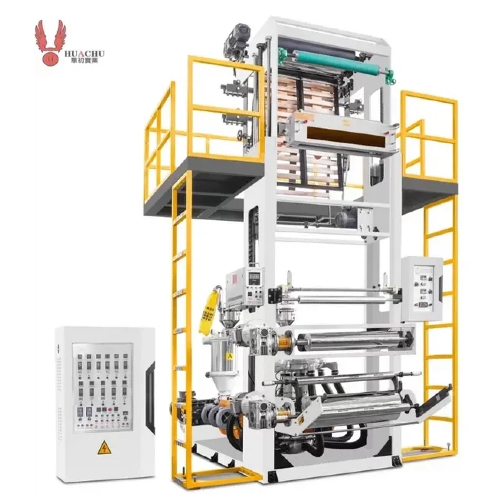
A Film Blowing Machine is a mechanical device used to produce plastic films by extruding molten plastic material through a die and blowing air into it, creating a thin plastic film. The film is then cooled and wound into rolls. This process is commonly used in the production of Polyethylene (PE) films, a versatile and widely used material.
How Does a Film Blowing Machine Work?
The operation of a Film Blowing Machine can be broken down into the following steps:
Extrusion: PE resin is melted in the extruder and forced through a circular die to form a thin tube of molten plastic.
Blowing: The extruded tube is inflated with air to expand the film into a thin layer. This creates the desired thickness and width of the film.
Cooling: The film is cooled as it rises through a cooling tower or air ring, which helps solidify it into the final product.
Winding: After cooling, the film is wound into rolls, ready for further processing or shipment.
Why is PE Film Popular in Film Blowing Machines?
Polyethylene (PE) is one of the most commonly used materials in film blowing due to its:
Cost-effectiveness: PE is relatively inexpensive compared to other plastics.
Flexibility and durability: PE films are strong, flexible, and resistant to moisture, making them ideal for various applications.
Recyclability: PE films are widely accepted in recycling programs, making them an environmentally friendly option.
Preparing the Film Blowing Machine for Setup
Before starting the actual setup process for producing PE film, it's crucial to prepare your Film Blowing Machine. Proper preparation ensures that your machine is in optimal working condition, reducing the chances of issues during production.
1. Check the Components
Ensure that all the key components of the Film Blowing Machine are intact and ready for operation. These components include:
Extruder: This is the main component that melts the PE resin and pushes it through the die.
Die: The die controls the shape and thickness of the film.
Air ring: The air ring helps in inflating the film and cooling it.
Cooling system: This system helps to cool the film as it is blown up, ensuring the plastic solidifies correctly.
Take-up system: The take-up system is responsible for pulling the film through the machine and winding it into rolls.
2. Inspect the Machine’s Cleanliness
Before loading the PE resin, thoroughly clean the machine to remove any residual material from previous operations. Contaminants can affect the quality of the PE film, so ensuring cleanliness is essential for producing consistent, high-quality products. Pay special attention to:
3. Verify the Settings
Check the machine’s settings before starting the setup. These settings include:
Temperature settings for the extruder and die.
Extruder screw speed and output rate.
Air ring settings for optimal inflation.
Cooling system settings to control the film cooling rate.
Step-by-Step Process to Set Up the Film Blowing Extrusion Machine for PE Film
Step 1: Load the PE Resin
The first step in setting up your Film Blowing Machine is to load the PE resin into the extruder. This resin is typically in the form of pellets, which need to be carefully loaded into the extruder hopper. The type of PE resin you use will depend on the film’s desired properties (LDPE, HDPE, etc.).
How to Load the Resin: Open the hopper, ensure it's clean, and load the PE resin evenly to prevent jams during extrusion. The correct loading technique will ensure smooth and consistent material flow.
Step 2: Set the Extruder Temperature
The extruder temperature is one of the most critical settings to control during the setup process. The right temperature ensures that the PE resin melts and flows smoothly.
Temperature Guidelines for PE: For LDPE (Low-Density Polyethylene), set the extruder temperature between 180-220°C (356-428°F). For HDPE (High-Density Polyethylene), the extruder should be set to about 210-240°C (410-464°F).
Adjust the temperature gradually, ensuring that the machine heats up slowly to avoid material degradation.
Step 3: Adjust the Die Settings
The die is responsible for shaping the molten PE into a continuous tube. Proper die settings are crucial to ensure uniform thickness and width of the film.
Adjust Die Gap: The gap in the die should be adjusted based on the thickness required for the final product. For a standard PE film, a typical die gap ranges from 0.5 mm to 2 mm, depending on the material and desired thickness.
Die Size and Shape: The size and shape of the die will affect the width and consistency of the film. Ensure the die is clean and aligned properly.
Step 4: Calibrate the Air Ring and Cooling System
The air ring is used to inflate the molten film into a thin, balloon-like shape. Proper air ring calibration ensures that the film is inflated evenly.
Air Ring Settings: Set the air ring pressure based on the desired bubble size. Typically, the air pressure will range from 0.2 to 0.5 bar, depending on the film's thickness and material.
Cooling Rate: The cooling system helps solidify the film as it expands. Ensure the cooling system operates at an appropriate speed to avoid defects like bubbles or uneven cooling.
Step 5: Set the Take-up System
The take-up system ensures the film is pulled evenly from the die and wound into rolls. Set the speed of the take-up system to match the extrusion speed. Too fast or too slow will lead to film tension problems.
Adjust Take-up Speed: The take-up speed should be adjusted based on the extrusion rate. For smooth operation, the take-up speed should match the film output rate, ensuring that the film remains taut but not overstretched.
Step 6: Start the Extrusion Process
Once all the settings are adjusted, it's time to start the extrusion process. Begin by slowly increasing the extrusion speed and temperature. Monitor the output carefully to check for consistency in the film thickness, transparency, and smoothness.
Gradually Increase Speed and Temperature: Avoid sudden changes in settings, as this can lead to uneven extrusion or film defects.
Key Factors to Monitor During the Setup
To ensure high-quality PE films, there are several critical factors to monitor throughout the setup process:
1. Monitoring Film Thickness
Film thickness should be checked regularly throughout the setup process to ensure uniformity. Use a thickness gauge to measure the film and adjust the die gap if necessary.
2. Ensuring Uniformity
Uniformity is essential for high-quality films. This includes ensuring consistent:
3. Adjusting Line Speed
The line speed refers to how quickly the film is pulled through the machine. Faster line speeds can reduce the thickness of the film, while slower speeds can lead to excessive film thickness.
4. Airflow Control
Proper airflow control is necessary to ensure the film is evenly inflated. If the airflow is too high, it can cause bubbles; if it’s too low, the film won’t stretch evenly.
Troubleshooting Common Issues During Setup
Even after carefully setting up the machine, issues may arise during the production process. Here are some common problems and their solutions:
1. Uneven Film Thickness
Cause | Solution |
Incorrect die settings or uneven extrusion | Adjust the die gap and ensure that the material is evenly distributed through the extruder. |
Uneven cooling rate | Ensure the cooling system is set to an optimal speed and that the air ring is balanced. |
2. Poor Film Transparency
Cause | Solution |
Excessive extrusion temperature or improper cooling | Lower the extrusion temperature and adjust the cooling rate to solidify the film quickly. |
3. Film Rupture or Holes
Cause | Solution |
Excessive air pressure or improper tension | Lower the air pressure and adjust the take-up speed to avoid tension. |
Conclusion
Setting up a Film Blowing Extrusion Machine for PE film production requires careful attention to detail and a deep understanding of the machine's components. From loading the PE resin to adjusting the extruder settings and fine-tuning the air ring, each step is essential in ensuring high-quality, uniform films. By closely monitoring key factors such as film thickness, airflow, and line speed, you can optimize your machine's performance, ensuring consistent results and improved production efficiency.
At Wenzhou Huachu Machinery Co., Ltd., we specialize in providing advanced Film Blowing Machines that deliver exceptional performance. Our team is dedicated to helping you achieve the best possible results in PE film production. Whether you're looking to upgrade your existing machine or need expert guidance on setup and optimization, we are here to assist. We invite you to get in touch with us to learn more about how our machines can enhance your production process and ensure top-quality films every time.
FAQ
Q1: What type of PE resin is best for use in a Film Blowing Machine?
A1: The best type of PE resin depends on the final film’s application. LDPE is suitable for flexible films, while HDPE is used for stronger, more rigid films.
Q2: How do I ensure the film has consistent thickness during production?
A2: Regularly check the thickness with a gauge and adjust the die gap accordingly. Ensure uniform extrusion and cooling for consistency.
Q3: What if my film is not extruding properly?
A3: Check the extrusion temperature and ensure the PE resin is flowing correctly. Clean the extruder and adjust the settings as necessary.
Q4: How can I prevent film defects during production?
A4: Monitor the extrusion rate, temperature, and cooling system closely. Adjust the die and air ring settings to ensure even inflation and cooling.
Q5: How do I know when the Film Blowing Machine is set up correctly?
A5: Once the film is produced, check for uniform thickness, transparency, and strength. If these qualities meet your expectations, the setup is successful.


