Introduction
Have you ever faced the issue of film sticking at the film mouth in your Film Blowing Machine process? It’s a common challenge that can disrupt production and affect film quality.
In this article, we’ll explore the causes of this problem and provide actionable solutions. You’ll learn how to tackle film sticking, improve your production process, and optimize your Film Blowing Machine for better results.
Causes of Film Sticking at the Film Mouth
Inconsistent Extrusion Temperature
One of the leading causes of film sticking is fluctuating extrusion temperatures. When the temperature is inconsistent, the polymer melt will flow unevenly through the die, causing some areas to cool more slowly or too quickly. This can lead to film sticking to the die or the film mouth, affecting the extrusion quality.
The melt temperature is critical because it affects the viscosity of the polymer. If the temperature is too low, the resin can become too thick, making it harder for the air to flow through the bubble and causing the film to stick. On the other hand, if the temperature is too high, the material may become too thin, causing instability in the film bubble, which also leads to sticking.
Solution:
● Maintain Consistent Extrusion Temperatures: Use automated systems for temperature control to minimize fluctuations. Regular calibration and real-time adjustments can help prevent temperature variations.
● Proper Die Temperature Control: Ensure the die temperature is uniform across the entire surface, preventing localized temperature variations that cause sticking.
Poor Cooling System
A malfunctioning or improperly set up cooling system is another common reason for film sticking. During the blowing process, the film needs to cool rapidly to prevent it from adhering to the die or other parts of the machine. If the cooling system is inadequate or uneven, the film can stick to the film mouth and other components of the machine, leading to defects in the final product.
Cooling plays a significant role in how well the film solidifies. Insufficient cooling leads to a soft film, which is more likely to stick to surfaces. If the air rings or cooling fans are not aligned or not functioning properly, the cooling process can be inconsistent, resulting in sticking.
Solution:
● Optimize Air-Ring and Cooling System: Ensure the air rings and cooling fans are positioned and calibrated correctly to provide uniform cooling around the film. Regular maintenance and cleaning of cooling components are essential to prevent blockages and ensure even airflow.
● Increase Cooling Efficiency: Using high-performance cooling systems can help the film cool down quickly, reducing the likelihood of sticking.
Resin Quality and Moisture Content
The quality of the resin used in the film blowing process is crucial in preventing film sticking. If the resin contains moisture or impurities, it can affect the film’s flow and cause it to stick to the die or the film mouth. Additionally, low-quality resins often have a higher viscosity, which can also contribute to this issue.
Moisture in the resin can cause steam generation during extrusion, which leads to sticking. Furthermore, some resins, if not dried properly before processing, can create problems with adhesion and surface quality.
Solution:
● Use High-Quality Resin: Ensure that the resin is suitable for the intended application and has the necessary properties for smooth extrusion.
● Proper Resin Drying: Before using the resin, ensure it is properly dried to remove any moisture content. Moisture can lead to defects and film sticking.
● Regular Resin Testing: Perform quality checks on the resin to ensure consistency in its flow and performance during the extrusion process.
High Blow-Up Ratio
The blow-up ratio refers to the ratio of the diameter of the inflated film bubble to the diameter of the extruder die. While a higher blow-up ratio can improve film strength and stretchability, it can also lead to sticking problems if not properly controlled. A high blow-up ratio increases the stretch on the film, which can lead to instability and cause the film to adhere to the die or air ring.
Solution:
● Adjust the Blow-Up Ratio: Lowering the blow-up ratio can reduce the strain on the film and prevent it from sticking to the film mouth.
● Balance Blow-Up Ratio and Film Quality: Adjust the blow-up ratio to balance the film’s strength and flexibility without causing film sticking or instability.
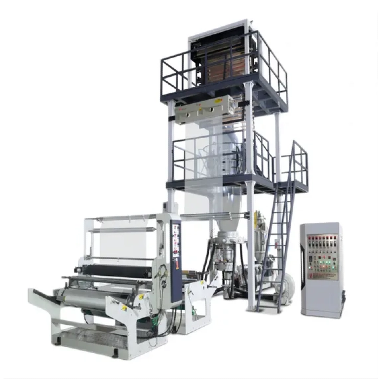
Solutions to Prevent Film Sticking at the Film Mouth
Improve Temperature Control
One of the most effective solutions to prevent film sticking is to maintain consistent extrusion temperatures. By controlling the temperature throughout the extrusion process, manufacturers can ensure that the resin flows smoothly without becoming too thick or too thin. Advanced temperature control systems and sensors can provide real-time feedback, making it easier to adjust the temperature settings and avoid fluctuations that can lead to sticking.
Solution: Use automated temperature control systems to ensure consistency in the extrusion process. These systems can automatically adjust the temperature to maintain optimal conditions throughout the operation.
Optimize the Cooling System
Proper cooling is essential in preventing film sticking. The cooling system, including air rings and cooling fans, should be calibrated to provide uniform cooling across the film’s surface. Regular maintenance of these systems is crucial to ensure efficient operation. Blockages in the cooling system can cause uneven cooling, leading to soft spots in the film that are more likely to stick to the die.
Solution: Regularly inspect and clean air rings and cooling channels to ensure that the cooling system is working efficiently and evenly.
Use Proper Resin Handling
To avoid moisture-related issues that can lead to film sticking, manufacturers should ensure that the resin is dry and free from impurities before it is used in the Film Blowing Machine. Proper resin storage, drying, and handling are crucial steps to prevent moisture from affecting the film quality.
Solution: Implement a strict resin handling protocol to store, dry, and feed resin correctly. This will minimize the chances of film sticking and ensure the resin performs optimally during the extrusion process.
Adjust the Blow-Up Ratio
The blow-up ratio should be carefully adjusted to ensure optimal film quality while minimizing the risk of film sticking. A lower blow-up ratio can reduce the stress on the film, preventing it from becoming too thin or unstable. Adjusting this ratio, depending on the film’s application and the required characteristics, will improve the overall film production process.
Solution: Continuously monitor the blow-up ratio to ensure that it aligns with the desired film quality without compromising production efficiency.
Regular Machine Maintenance
Routine maintenance of the Film Blowing Machine is essential for ensuring optimal performance and preventing film sticking issues. Regularly inspect and clean critical components, such as die heads, air rings, and cooling systems, to maintain smooth operation. Well-maintained machines are less likely to suffer from performance issues, including film sticking.
Solution: Set up a maintenance schedule to inspect and clean your machine components regularly. Preventative maintenance will help avoid unexpected breakdowns and ensure consistent film quality.
Advanced Techniques for Solving Film Sticking
Use of Anti-Stick Coatings
To reduce friction and prevent film from sticking to the die or film mouth, manufacturers can use anti-stick coatings. These coatings are applied to critical machine parts, such as the die lips and air rings, to create a smoother surface for the film. The use of these coatings can greatly reduce the chances of film sticking and improve overall production efficiency.
Solution: Consider using anti-stick coatings for parts that frequently come into contact with the film to minimize sticking and reduce wear on your equipment.
Automation and Monitoring Systems
Automation and real-time monitoring systems are increasingly being used in modern Film Blowing Machines to prevent issues like film sticking. These systems monitor parameters such as temperature, pressure, and resin feed rate in real-time, allowing manufacturers to make immediate adjustments. Automation improves efficiency and ensures that film sticking problems are detected and resolved quickly.
Solution: Invest in automated control systems that provide real-time data and adjustments to keep the production process running smoothly and prevent film sticking.
Adjusting Die Design
Sometimes, the problem of film sticking can be alleviated by adjusting the design of the die. Features such as tapered die lips and optimized airflow can improve the flow of the molten polymer, reducing the chances of the film sticking. A well-designed die helps control the cooling and stretching of the film, preventing it from adhering to the die or film mouth.
Solution: Review and adjust the die design to optimize airflow and reduce friction during the film extrusion process.
Preventive Measures to Avoid Future Film Sticking Issues
Implement Quality Control Measures
By implementing strict quality control measures, manufacturers can ensure that film sticking issues are minimized. Regular checks of resin quality, extrusion temperatures, and cooling rates will help identify and resolve potential issues before they affect production.
Solution: Establish a comprehensive quality control protocol to monitor and adjust key parameters throughout the production process.
Train Operators
Operator training is a critical component in preventing film sticking. Properly trained operators can quickly identify when something is wrong and take corrective action. Additionally, having standard operating procedures (SOPs) in place will help ensure consistent practices and reduce the chances of operator error.
Solution: Regularly train operators on best practices for temperature control, cooling, and maintenance procedures to reduce film sticking incidents.
Invest in Advanced Equipment
Investing in modern, advanced Film Blowing Machines can provide several benefits, including better temperature control, improved cooling systems, and more precise blow-up ratio adjustments. These machines are designed to help manufacturers address common production issues like film sticking more effectively.
Solution: Consider upgrading to newer equipment that offers advanced features for better control and higher production efficiency.
Conclusion
In this article, we explored the common problem of film sticking at the film mouth during the Film Blowing Machine process. We discussed its causes, including inconsistent extrusion temperatures, poor cooling systems, and resin quality issues. We also provided actionable solutions to prevent this problem, such as improving temperature control, optimizing the cooling system, using high-quality resin, and adjusting the blow-up ratio.
Additionally, we highlighted how Wenzhou Huachu Machinery Co., Ltd. offers advanced Film Blowing Machines equipped with cutting-edge technology designed to prevent issues like film sticking. These machines are built for high precision and reliability, ensuring consistent and high-quality film production.
With these solutions in place, manufacturers can improve their production efficiency, reduce downtime, and achieve superior film quality in their operations.
FAQ
Q: What causes film to stick at the film mouth in the Film Blowing Machine?
A: Film sticking at the film mouth is often caused by inconsistent extrusion temperatures, poor cooling systems, high blow-up ratios, or poor resin quality. These issues can lead to uneven film formation and adhesion to the machine components.
Q: How can I prevent film sticking in a Film Blowing Machine?
A: To prevent film sticking, ensure consistent extrusion temperatures, optimize the cooling system, use high-quality resin, and adjust the blow-up ratio. Regular maintenance of the equipment is also crucial to avoid sticking problems.
Q: Why is cooling important in preventing film sticking?
A: Cooling is vital to solidify the film quickly and evenly. An inefficient cooling system can result in soft spots in the film, which are more likely to stick to the die or air ring. Proper cooling prevents this and improves overall film quality.
Q: How does the blow-up ratio affect film sticking in Film Blowing Machines?
A: A high blow-up ratio can stretch the film too much, causing instability and increasing the chances of sticking to the die or air ring. Adjusting the blow-up ratio to an optimal level can help prevent film sticking and improve the film’s quality.
Q: What are the benefits of using high-quality resin in the Film Blowing Machine?
A: High-quality resin ensures smooth extrusion and reduces the chances of film sticking. It also provides better film clarity, strength, and flexibility, improving the overall performance of the Film Blowing Machine and the final product quality.


